Hebei Weitong Hydraulic Technology Co., Ltd


 Esperanto
 Shqiptare
 Euskara
 Zulu
Zulu
 Latinus
 Cymraeg
 தமிழ்
தமிழ்
 Slovak
 Slovak
 Afrikaans
What are the characteristics of sae flange sealing surface?
发布时间:
2022-07-11
Concave surface (MFM): The sealing surface of this sae flange consists of a concave surface and a convex surface, and the gasket is placed in the concave surface. Compared with flat flanges, gaskets in concave flanges are not easy to squeeze, easy to assemble, and have a wider working pressure range than flat flanges, and are used in occasions with strict sealing requirements. However, for equipment with high operating temperatures and large diameters, some people believe that there is still a possibility that the gasket will be squeezed when using this sealing surface.

What types of common sae flange sealing surfaces are there, and what are their characteristics?
Full face (FF): The sae flange has a smooth sealing surface, simple structure, convenient processing, easy anti-corrosion lining construction, and can be used at low pressure and low temperature. However, the contact area between this sealing surface and the gasket is large, and the required pressure is large. Do not fit retaining washers when installed. When preloaded, the gasket easily stretches or moves to the sides. When connecting lining flanges or non-metallic flanges, the use of FF face flanges can ensure that the sealing surface will not break during fastening, especially when using FF face.
Protruding surface (RF): This structure is simple and easy to process, so it can be used where the pressure is not too high and the temperature is not too high, but some people think that the gasket may be squeezed out when used under high pressure. Due to its convenient installation, it is a widely used sealing form below PN150.
Concave surface (MFM): The sealing surface of this sae flange consists of a concave surface and a convex surface, and the gasket is placed in the concave surface. Compared with flat flanges, gaskets in concave flanges are not easy to squeeze, easy to assemble, and have a wider working pressure range than flat flanges, and are used in occasions with strict sealing requirements. However, for equipment with high operating temperatures and large diameters, some people believe that there is still a possibility that the gasket will be squeezed when using this sealing surface.
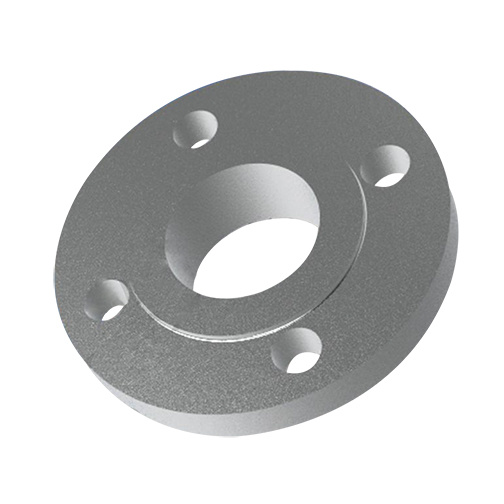
Mortise and tenon sealing surface flange (TG): The sae flange sealing surface is matched by a slot surface and a slot surface, and the gasket is placed in the groove. Like the concave-convex flange, the mortise and tenon flange is not squeezed in the groove, the compression area is small, and the gasket is evenly stressed. Since the gasket is not in direct contact with the medium, it can be used in the occasions with strict sealing requirements such as high pressure, flammable, explosive, and toxic media, and the corrosion effect of the medium and the penetration effect of the pressure mechanism are small. This kind of sealing surface gasket is beneficial to neutral when installed, but it is more difficult to process the sealing surface and replace the gasket.
Ring cover (RJ): The sae flange sealing surface gasket is placed in the annular groove, the gasket is not squeezed in the groove, the pressing area is small, and the gasket is evenly stressed. Since the gasket does not directly contact with the medium, the medium The corrosion effect and the penetration effect of the pressure mechanism are small, and it can be used in occasions with strict sealing requirements, such as high pressure, flammable, explosive, toxic media, etc.
So, what is the general practice in the industry for selecting a sealing face? What do we know?
At present, some industry design institutes are still strictly following the provisions of "HG/T20583-1998" and "HG/T20583-20111 Appendix A, B". ; For inert gas medium, MFM surface is used for the pressure level of PN40 and PN63; for hydrogen, it is distinguished according to the pressure level, and MFM surface and TG surface are used respectively.
推荐阅读
Hotline
Weitong Hydraulic Technology
Manager Wang:+86 15732852253
Manager Zhang:+86 18812182253
Manager Zhao:+86 15383181472
Company telephone:+1 213 7265411
E-mail:saeflange007@gmail.com
Mobile website